The Distel family
William Robert “Willi” Distel
Villingen, 3 April 1906 - Melbourne, 27 July 1972
A hairdresser from the Black Forest who left home at seventeen and did not settle until Melbourne, twelve years and four countries later.
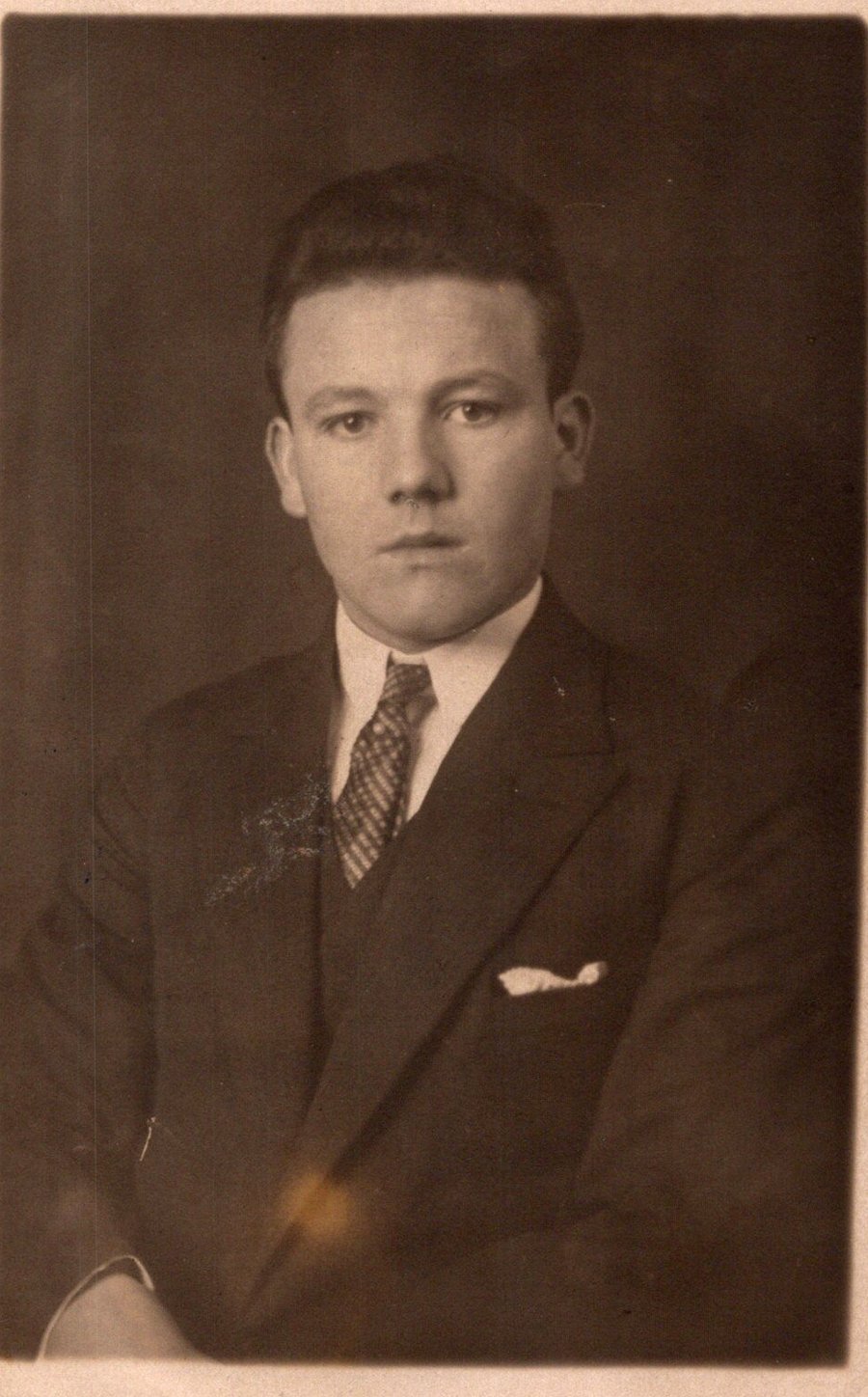
He was born at eleven in the morning on 3 April 1906, in the Niedere Strasse in Villingen, and registered three days later as Wilhelm Robert, the second son of Robert Distel, master butcher, and his wife Anna. He signed himself Willi all his life, and in Australia answered to William and to Bill.
He left school in 1920. A confectionery apprenticeship fell through on the first day, his father wanted him in a factory, and he went down to the labour exchange himself to see what was left. Three trades still had a place open: printing, bookbinding, hairdressing. He took the hairdressing, and it carried him for the rest of his working life: through Frankenthal in the French-occupied Rhineland at the height of the hyperinflation, through Stuttgart, Auerbach, Berlin, Bremen and Düsseldorf, on foot across Westphalia with no job at all, then to Sweden, and to Switzerland.
He sailed for Australia from Toulon in 1928, landed at Fremantle, and reached Melbourne on 1 February 1930. The Villingen side of the family put the decision down to the Depression, and set it out in five sentences in the booklet they printed for the family butcher’s shop in 1986:
Willi lernt das Friseurhandwerk. Er beschliesst in der Zeit der Weltwirtschaftskrise auszuwandern. Sein Ziel ist Australien, wo er in der Gegend von Melbourne ein Friseurgeschäft betreibt.
Willi learned the hairdressing trade. He decided to emigrate during the world economic crisis. His destination was Australia, where he runs a hairdressing business in the Melbourne area.
A few years later his mother wrote from Villingen asking whether he could look
after his younger brother Alf through the Depression. That was all it took, a
few simple words.
He married Doris Thora Verbena Blundell in Melbourne
in 1936; they had three children, Derek, Alan and Kay. In 1949 he gave up the
trade altogether and bought a general store at Walpa in East Gippsland. He died
at the Royal Melbourne Hospital in 1972, aged 66.
What he left
His life in dates
Villingen, 1906-1920
- 19 Feb 1903
His parents marry at Villingen: Robert Distel, master butcher, and Anna Zeller of Geisingen. Robert already has a son, Theodor, by an earlier marriage.
- 3 Apr 1906
Born at 11 a.m. at the family house in the Niedere Strasse, Villingen, and registered three days later as Wilhelm Robert.
- 1904-1925
One of a large family: Adolf, Willi, Friedrich, Alfons, Robert Junior, Balthasar, Veronika, and long afterwards Bernhard.
- 2 Feb 1919
His brother Balthasar dies, aged eight, in the Herdstrasse.
- c.1920
His parents make their
big move
from the Herdstrasse to the Hauptstrasse, and run the butcher’s shop there for a time. - 1920
Leaves the Villingen elementary school. The confectionery apprenticeship collapses:
By law I am not allowed to take on an apprentice, and over Easter I simply forgot to tell your parents.
He goes to the labour exchange himself.
Apprenticeship and the journeyman years, 1920-1926
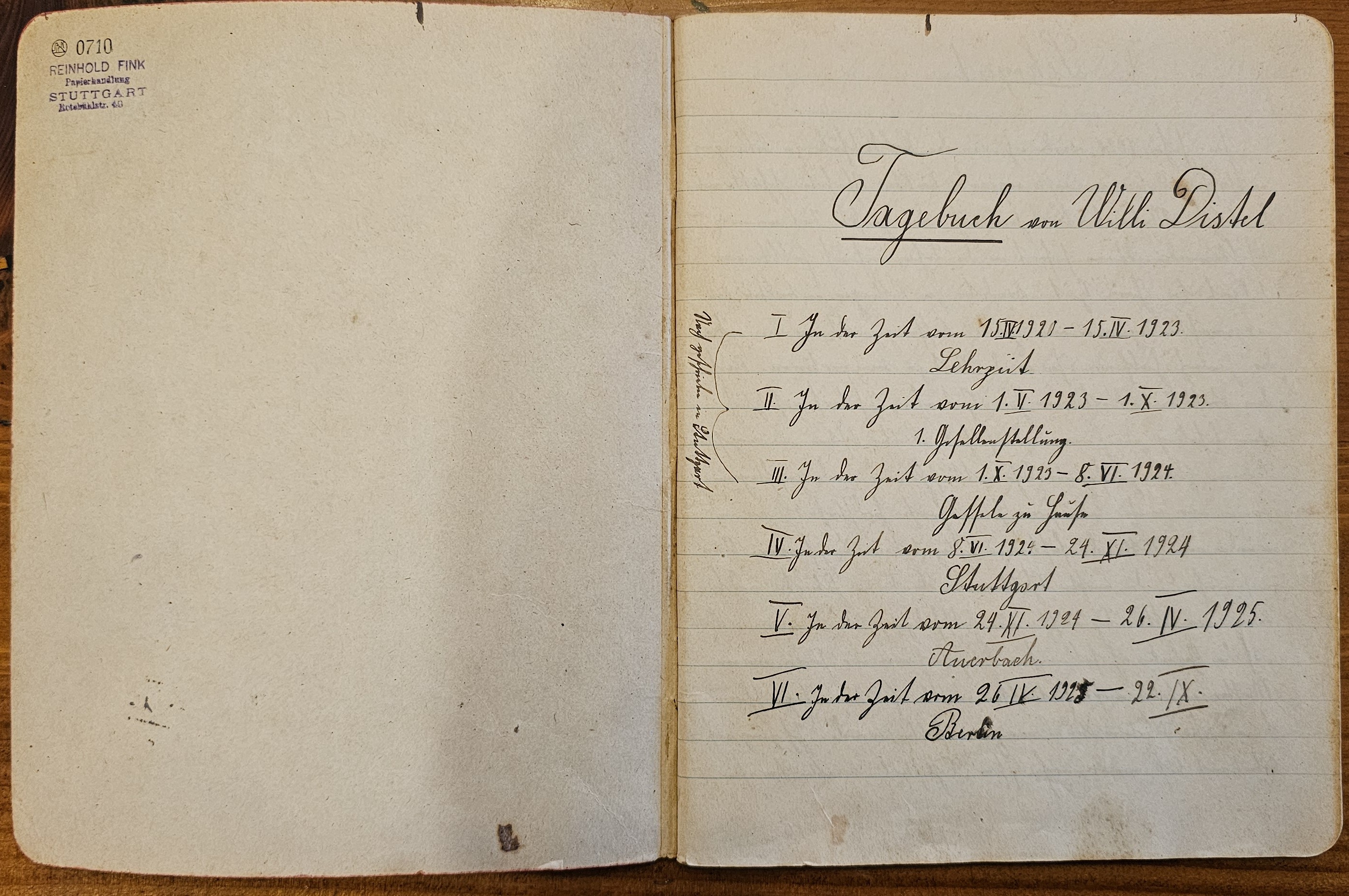
His own chapter headings give the dates.
- 1920-1923
Apprenticed to master hairdresser Herr Huber, Niederstrasse, Villingen, aged 14. A hard shop. He wins a “very good” at the apprentices’ exhibition, passes both examinations easily, and plays for Football Club 08’s first youth team. He does not stay a single day past his indenture.
- May-Oct 1923
First journeyman post: Frankenthal in the Palatinate. His first time away from home, at seventeen, in the French-occupied Rhineland during the hyperinflation. Trains stopped, bridges shut, letters taking a fortnight. His wage some weeks is ten cigarettes. His parents get him home by a trick: a postcard saying his father is fatally ill.
- 1923-1924
Home in Villingen, gaunt and out of work; grubs tree-stumps in the woods with his brothers until he falls ill. Takes a post to learn ladies’ hairdressing. On his eighteenth birthday begins his first romance, with Else Stoll.
- Jun-Nov 1924
Stuttgart. He and his friend Paul save hard for a new suit and see almost nothing of the city. Told one Saturday to work faster, he resigns on the spot.
- 1924-1925
Auerbach im Vogtland, in the Schützenstrasse, fifth of five employees. Learns
a great deal on the ladies’ side
; spends Christmas inside the family circle, which the other men resent. - Apr-Sep 1925
Berlin. Arrives at the Anhalter Bahnhof and is
forever amazed
at the giant city. Wins his footing through bob-cutting after the senior stylist walks out.Berlin remains Berlin - I liked it very much, and I shall very probably go there again.
- Oct 1925
Wilhelmshaven. A fortnight, then notice, after a row over tips in which he deliberately lets the blame fall on himself. Stares at the naval harbour and the North Sea.
- from Nov 1925
Winkler’s, Bremen, a specialist ladies’ salon, the staff otherwise all women. Popular quickly,
mainly through my bob-cutting
. The studio portrait at the head of this page belongs to these months. - Spring 1926
On the road with no post, mostly on foot: Osnabrück, Bielefeld, Detmold, the Externsteine, Paderborn, Soest, Dortmund, Bochum, Essen, Duisburg.
No one wept, except the sky wept as I left Bremen.
- May-Oct 1926
Düsseldorf, a big shop on commission: water-waving, hairpieces, perms. His best week turns over 260 marks. Nearly drowns swimming the Rhine. Leaves of his own accord,
for the travel-bug drew me away, and this time it was abroad
.
Sweden and Switzerland, 1926-1928
- 1926-1927
Borås, Sweden:
a small, genuinely Swedish industrial town that offers absolutely nothing.
Hard at first for the language, which he then picks up fast. He has to leave the town because he has no visa. - Feb-Mar 1927
Stockholm, nominally managing a business whose conditions he says he cannot describe. He gives notice; the police expel him at the same time.
Stockholm itself is a magnificent city, entirely set in water.
- 3 Apr 1927
Reaches his father’s house
in the first hour of my majority
, his twenty-first birthday, after nearly three years away. He meets his youngest brother Bernhard, not quite two, for the first time. - 1927
Over the Gotthard to Andermatt, working half past seven in the morning to half past nine at night in a village full of soldiers. Whitsun in the Ticino:
unforgettable days
. - Autumn 1927
Goes to the Welschland to learn French: Lausanne, Geneva, then four months at Neuchâtel, staying only because he is
absolutely set on French
. - Early 1928
Montreux. The salon in the Palace Hotel, the finest in the town, where the staff are expected to talk every lady into buying a fur.
The lovely lake, the white magnificent sunlit mountains - it all made an unforgettable impression.
- Spring 1928
In spite of this splendour, a longing for foreign lands ruled my soul, and so I managed to find a position in Australia.
He trains in permanent-waving at Zurich, then goes home for eight days.
The voyage, Perth and Melbourne, 1928-1930
- Jun 1928
Leaves home at Whitsun. Across Switzerland and part of France to Toulon, where he watches the Ormonde come in from his hotel window and boards at about four o’clock.
- Jun 1928
Naples, Port Said, the Suez Canal, Colombo: his first sight of the East, and a Red Sea heat like nothing he has known.
Dancing and other things distracted me and let me forget the heat.
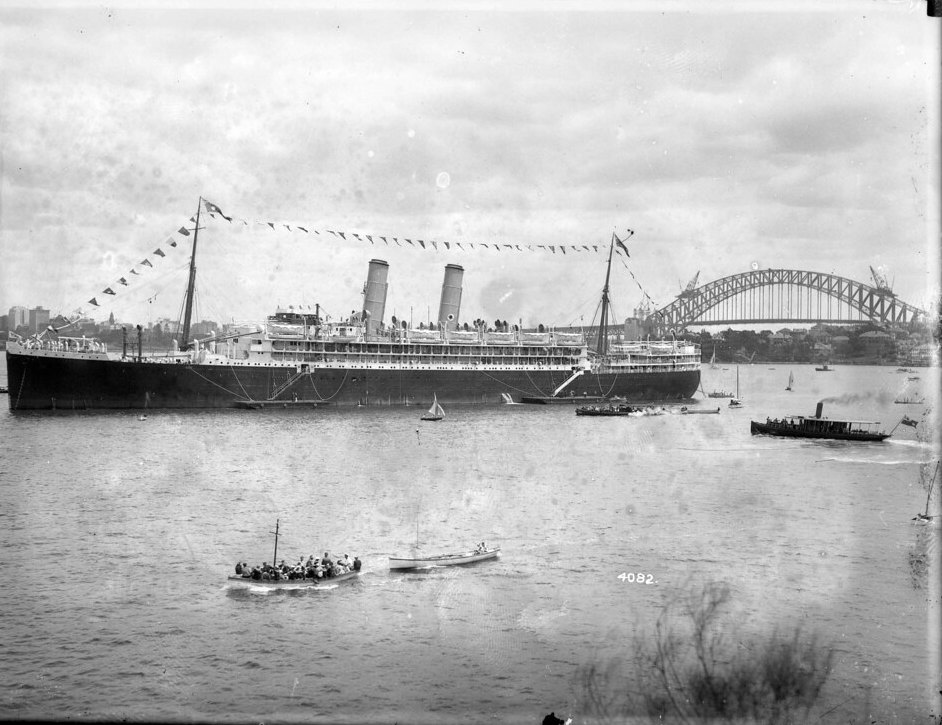
Australian National Maritime Museum, William Hall collection, object 00013681. No known copyright restrictions.
- Late Jun 1928
Lands at Fremantle:
and I was so sorry that it was the endport for me
. - 1 Jul 1928
Starts at Mr Indel’s newly opened shop in Perth. A hard beginning: the customers ask only for Mr Indel. He is
not home sick but depressed
, and set on learning English as fast as he can. - 1928-1929
The Perth years: the Swiss and German circle, tennis and football, Kings Park and the Swan River, a 600-mile motor trip to Dongara. And Vivian:
for the first time in my Life I was in love.
- Dec 1929
Walks out of the shop before Christmas, without notice, after asking four times to have the terms changed.
It was on my site a very bad thing to do, but I had to go befor I had forgotten my-self.
The next day his brother Alfons arrives in Western Australia. - Jan 1930
The brothers sail from Fremantle on the Karoola, calling at Albany, then nine and a half hours ashore at Adelaide,
a very nice town with broad streets
. - 1 Feb 1930
Reaches Melbourne. A boarding house in Brunswick the same day, work within three days;
Alfons’s position was almost hopeless.
- 7 Feb 1930
Starts at Mr Villard’s, Collins Street: upstairs, nicely furnished, a terrible heat under the glass roof in a hot spell, and
one of the worst staff I ever struck
, fighting constantly. He decides to keep strictly neutral, and keeps the well-paid shop. - 1930
Lodges with Mrs Buisemann at Glenlyon Road, East Brunswick:
the nicest old lady I ever came across.
Buys a motorcycle and tours Lorne, Portland, Healesville and the Australian Alps. Here the diary ends.
Melbourne, marriage and Walpa, 1930-1963
The diary stops in 1930 and nothing replaces it. What follows rests on four documents and on his son’s memory, dictated seventy-odd years later. Read the thinness of this stretch as a gap in the record, not a gap in the life.
- 1930s
Runs a hairdressing business in the city of Melbourne, and by his son’s account makes good money at it. He is remembered as having brought out one of the first permanent-waving machines, which fits: he trained in permanent-waving at Zurich immediately before sailing.
- 1930s
His mother writes from Villingen to ask,
can you look after Alf during the depression?
That was all it took, a few simple words.
- 29 Mar 1932
His mother Anna dies at Villingen, aged 49. He is in Melbourne.
- 15 Feb 1936
Marries Doris Thora Verbena Blundell at East St Kilda, Melbourne. She was born at Ealing, Middlesex, in 1911.
- 1939-1943
Three children born at Caulfield: Derek (1939), Alan (1941) and Kay (1943).
- Mid 1940s
An aunt and uncle arrive from Europe, the Caulfield house overflows, and the two boys sleep in cloth tents in the backyard for nearly six months.
- 13 Feb 1946
His father Robert dies at Villingen, aged 78, at four in the afternoon. He is in Australia. (The certificate gives the Herdstrasse as Robert’s address, not the place of death, and records no cause.)
- Sep 1949
Gives up the trade. Buys the Walpa General Store in East Gippsland, an established business of nearly a century, twelve miles out of Bairnsdale, and moves the family there, running deliveries out to Kalulu and beyond.
That was the first break away from his trade.
- c.1952-53
Doris leaves, taking Alan and Kay, and leaving thirteen-year-old Derek with him at the store.
- 25 Sep 1963
Decree nisi dissolving the marriage, in the Supreme Court of Victoria, no. 324 of 1963; solicitors R. W. Barrie & Co. of Queen Street, Melbourne. He is the petitioner. It becomes absolute on 27 December, after twenty-seven years of marriage.
Last years, 1964-1972
- 1965
Goes back to Germany, sailing from Melbourne in April, by steamship by preference:
but this era was coming to an end.
He stays a long time,perhaps with a view to even staying there permanently.
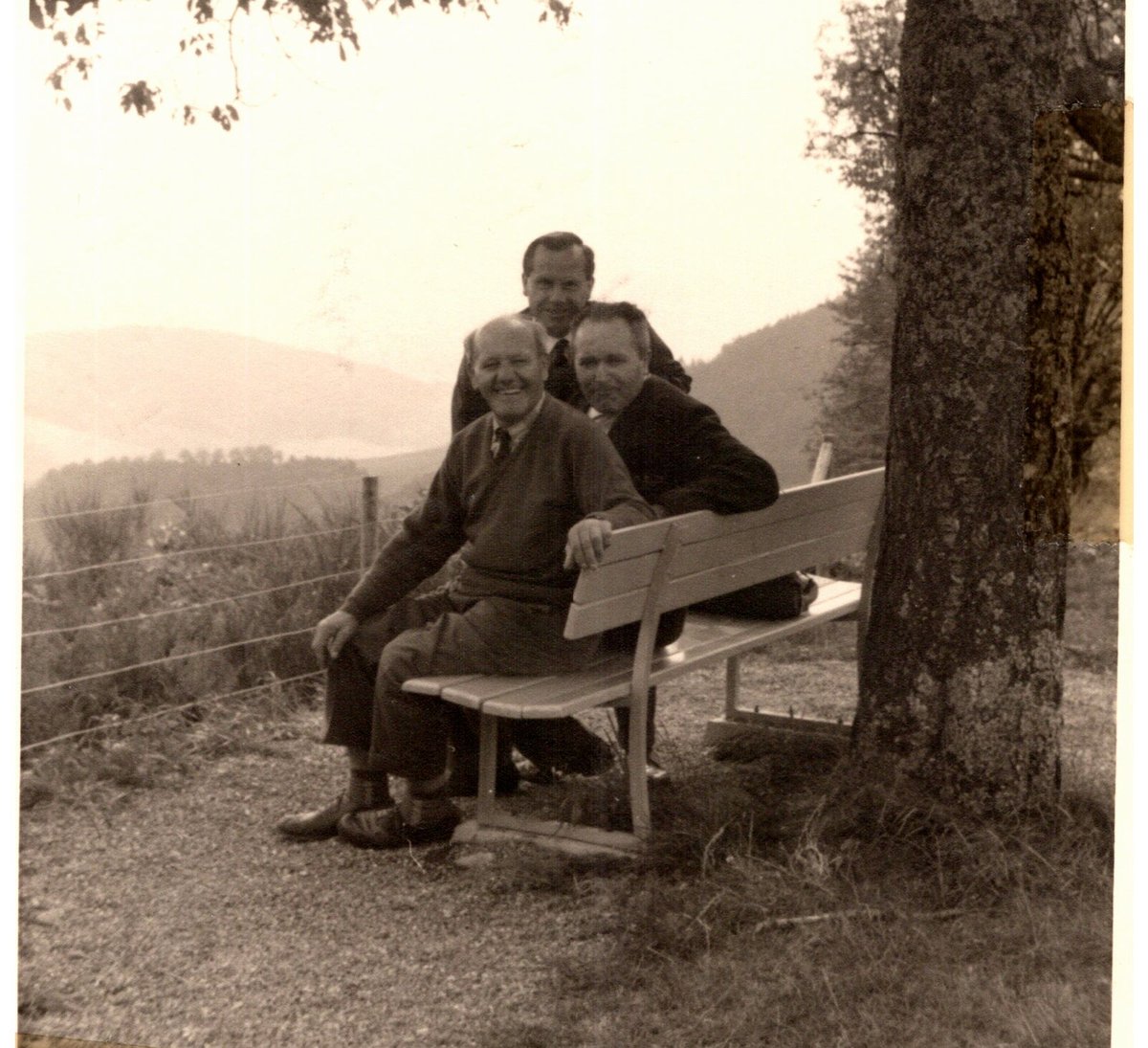
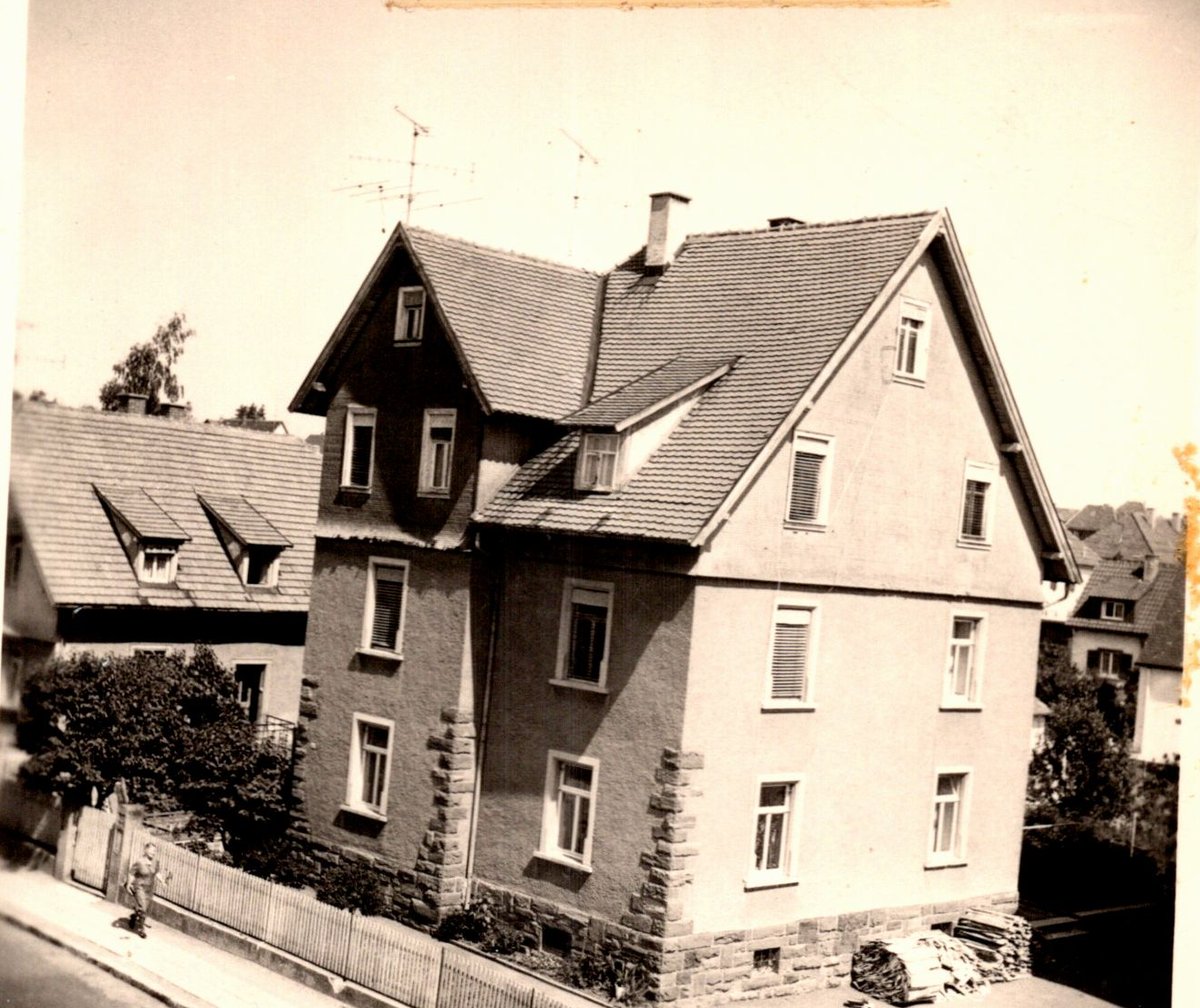
Die alte Heimat, 1965: the old homeland. One of around 130 photographs he brought back from that journey, nearly every one written on the back, in German, in English, and often both in the same sentence.
- 27 Jul 1972
Dies at the Royal Melbourne Hospital, Parkville, of cancer of the pancreas, aged 66.
After
- 1974-1990
His brothers die in turn: Friedrich at Villingen in 1974, Bernhard at Villingen in 1978, Alfons, the brother he brought out and shipped to Melbourne with him, at Brisbane in 1988, and his half-brother Theodor at Rochester, New York, in 1990.
- 11 Jan 2000
Doris dies at Ferntree Gully, aged 88, having outlived him by twenty-eight years.
About this page
The years 1920 to 1930 are dated from his own diary, and can be pinned to the week. The forty-two Australian years that follow rest on four documents and on his son Derek’s recollection. Where the two disagree, the diary wins.
The diary itself notes that its early chapters were written up later, in
Stuttgart
, so the apprenticeship years are recalled rather than
contemporaneous. Quotations are given as he wrote them, including the English of
the later pages, which he was still learning.